Blood Pressure
We can't feel our blood pressure yet it is a biometric that plays a major role in our overall health.
Learn how to check your blood pressure by watching this video.
Write your awesome label here.
My Awesome Video
This is a responsive YouTube video embed. Remember to replace VIDEO_ID_HERE with the actual ID of the YouTube video you want to embed.
Learn About Blood Pressure
Blood pressure is a measure of the force blood exudes on the arterial wall. There are two measurements in blood pressure, systolic, which is the maximum pressure your heart produces when it is pumping, and diastolic, which is the pressure in your arteries when your heart is between pumping.
Systolic pressure is affected by a variety of factors, such as anxiety, caffeine consumption, and performing resistance and cardiovascular exercises. All of these can cause temporary changes in blood pressure.
As for the blood pressure biometric, we are focused on your resting blood pressure because it is an important indicator for your long term health.
Systolic pressure is affected by a variety of factors, such as anxiety, caffeine consumption, and performing resistance and cardiovascular exercises. All of these can cause temporary changes in blood pressure.
As for the blood pressure biometric, we are focused on your resting blood pressure because it is an important indicator for your long term health.
What is considered a healthy blood pressure?
| Ranges | Systolic (mmHg) | Diastolic (mmHg) |
| Healthy | <120 | <80 |
| Pre-Hypertensive | 120-139 | 80-89 |
| Hypertensive | >139 | >90 |
Low blood pressure: A systolic blood pressure lower than 90 or diastolic blood pressure lower than 60. If you have low blood pressure, you may feel lightheaded, weak, dizzy, or even faint. It can be caused by not getting enough fluids, blood loss, some medical conditions, or medications, including those prescribed for high blood pressure.
If your blood pressure is high or low, work with your doctor to make improvements. Medical care from a qualified clinician is crucial.
People who have high blood pressure are at increased risk for cardiovascular disease which includes stroke and heart failure, kidney disease, and all-cause mortality. High blood pressure means that the cardiovascular system has to work much harder in order to circulate blood throughout the body. For people who are mildly hypertensive, with readings around 140/90, the most effective means of controlling blood pressure is lifestyle modification.
How can I reduce my blood pressure on my own?
Each one of the methods listed below can have a clinically relevant positive impact on your blood pressure. However, adopting all of these techniques will result in larger improvements.
Each of the methods listed below can have a clinically meaningful impact on lowering your blood pressure. While even one strategy can make a difference, combining all of the approaches will lead to greater improvements.
Nutrition Modifications
Eating a Whole Food Mediterranean-Style Diet encompasses all of the techniques listed below.
Consume Foods with Fiber
Adding more whole foods that contain fiber is an important modification.
Beans, whole grains, vegetables, fruit, nuts, and mushrooms contain fiber. Make them the center of your diet.
Reducing Sodium
99.4% of US adults consume more sodium than is recommended. Consuming sodium increases blood pressure.
Keep in mind that the vast majority of sodium in our diets comes from packaged food and hyperpalatable food. Removing those foods from our diet can have a profound impact on the amount of sodium we consume. Even packaged foods that we think of as sweet can contain a lot of sodium.
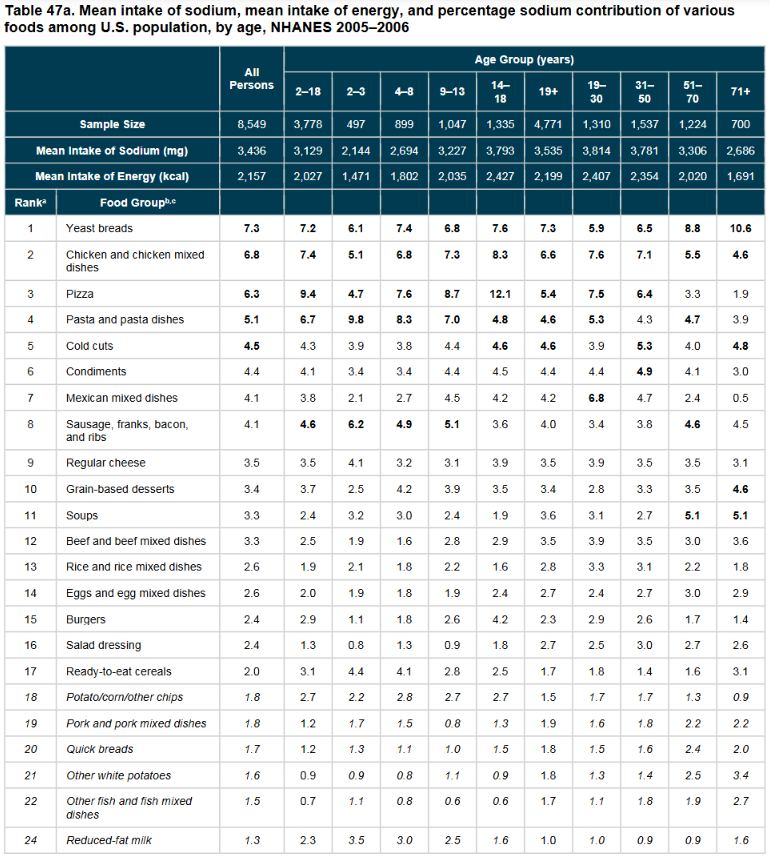
The largest contributors of sodium to the US population are bread and chicken (ref). Many store bought breads have a variety of additives to keep them fresh longer and sodium is one of those additives. Sodium is added to chicken, and other meat products, because it acts as a preservative. Even the common raw chicken breast sold at the supermarket can be injected with salt water to add weight and increase profits.
Keep in mind that the vast majority of sodium in our diets comes from packaged food and hyperpalatable food. Removing those foods from our diet can have a profound impact on the amount of sodium we consume. Even packaged foods that we think of as sweet can contain a lot of sodium.
The largest contributors of sodium to the US population are bread and chicken (ref). Many store bought breads have a variety of additives to keep them fresh longer and sodium is one of those additives. Sodium is added to chicken, and other meat products, because it acts as a preservative. Even the common raw chicken breast sold at the supermarket can be injected with salt water to add weight and increase profits.
Rule of thumb: For foods that have a nutrition label, select items that have fewer mg of sodium per serving than the number of calories per serving.
Consider low sodium and high fiber breads, like Ezekiel. Chicken could be replaced with low sodium beans, like these chickpeas.
See the list of top 24 sources of sodium in the US.
Increasing Potassium
Less than 2% of US adults consume sufficient potassium. Consuming potassium decreases blood pressure.
Most people know that bananas have potassium, but there are many other great sources of potassium. Here is a list of foods that are high in potassium:
- Beans: Lentils, beans, and chickpeas (if you are buying canned, look for low sodium options)
- Fruits: Bananas, oranges, avocados, dried fruits (raisins, apricots, prunes)
- Vegetables: Potatoes (especially with the skin), spinach, sweet potatoes, mushrooms, tomatoes
2 Goals for 1 Swap: One way to both decrease sodium and increase potassium is to move away from using traditional salt in your kitchen and using a 50/50 blend of sodium and potassium salt or using a 100% potassium salt. Most people can't taste the difference between 50/50 salt and regular table salt, making it an easy and effective substitution.
Before consuming potassium salt, consult with your doctor. Potassium salt can interact with some medications. If you have any kidney problems or are unaware if your kidneys are healthy, potassium salt may not be the best option for you.
Reducing Alcohol
Reducing alcohol consumption to be two drinks or fewer per day can have a significant effect on lowering blood pressure.

Physical Activity
Exercise is a great way to lower your blood pressure. Aim for 30 minutes of moderate exercise 5 times per week or more.
Weight Loss
For overweight individuals reducing weight can be one of the most impactful interventions for lowering blood pressure. The previously listed strategies can all play a role in weight loss.
Quit Smoking
If you smoke, then quitting smoking should be the top priority as it can have a major effect on blood pressure. In the image below you can see additional changes and typical reduction ranges.
Smoking cannabis is not as well studied as smoking tobacco when it comes to blood pressure. However, cannabis use does increase the risk of heart attack.
"Earn It, Return It"
Want to get 100% of your money back? That's right, you can get our program for free!!!
It is simple to qualify!
1. Complete the program and improve at least one core biometric: LDL cholesterol, blood pressure, blood glucose or A1c, or weight for people with a BMI over 25. (Don't worry, almost everyone sees an improvement in one or more metrics.)
It is simple to qualify!
1. Complete the program and improve at least one core biometric: LDL cholesterol, blood pressure, blood glucose or A1c, or weight for people with a BMI over 25. (Don't worry, almost everyone sees an improvement in one or more metrics.)
2. Post about your results on social media and let us use your results in our marketing materials.
3. Write an online review.
Once you do that, you will get 100% of your money back!
3. Write an online review.
Once you do that, you will get 100% of your money back!
Write your awesome label here.
Dr. Paul N. Hopkins, MD, MSPH, FNLA
Dr. Hopkins received his medical training at the University of Utah and Mayo Graduate School of Medicine in Rochester Minnesota.
He is board certified in Public Health and Preventive Medicine as well as Clinical Lipidology.
Dr. Hopkins has been involved in efforts to promote greater understanding and prevention of premature, familial coronary artery disease (CAD) with the Cardiovascular Genetics (CVG) group since 1978. He has been a Principal Investigator (PI) or Co-Investigator for numerous NIH grants focused on the genetics of CAD, hypertension, lipids, diabetes, and metabolic syndrome. Dr. Hopkins is currently Co-Director of Cardiovascular Genetics at the University of Utah and Director of the Cardiovascular Disease Prevention Clinic.
From 1998 to 2004 Dr. Hopkins was International Chair for the MEDPED program (Make Early Diagnoses to Prevent Early Death), started by the late Dr. Roger Williams to find, educate, and help prevent premature CAD in persons with FH. Dr. Hopkins served as an NIH grant reviewer and continues to be a reviewer for numerous medical journals. He teaches at the University of Utah School of Medicine, is an active lecturer, and serves as a statistical consultant for the Center for Clinical and Translational Studies statistics group at the University of Utah.
Get the Blood Glucose & Diabetes Handout
Check your email!
Write your awesome label here.